Finding the right warehouse can be challenging for businesses that need more space, better accessibility, or a facility that can support changing operational requirements. Warehouse leasing in the Philippines provides businesses with access to ready-to-use facilities without the large upfront investment associated with acquiring or developing a warehouse.
For logistics companies, distributors, importers and exporters, retailers, FMCG businesses, and other organizations that require reliable storage space, leasing can provide a practical way to expand operations while maintaining greater flexibility.
Looking for Warehouse Space for Rent?
ISLA Logistics Corporation provides warehouse solutions in the Philippines, including warehouse leasing, build-to-suit developments, leaseback options, and flexible storage solutions. Our strategically located facilities are designed to support logistics, distribution, storage, and other business requirements.
What Is Warehouse Leasing?
Warehouse leasing is an arrangement where a business rents or leases warehouse space from a property owner or warehouse provider for an agreed period and under defined lease terms.
Instead of purchasing land, constructing a facility, and taking responsibility for the entire property, a business can lease an existing warehouse that is suitable for its operational requirements.
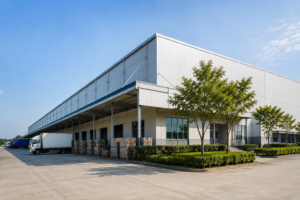
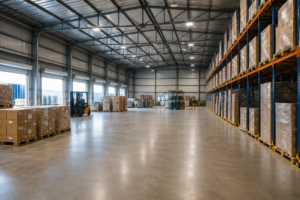
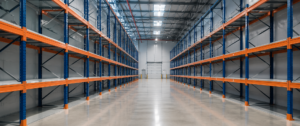
Depending on the facility and agreement, a leased warehouse may provide access to features such as storage areas, loading and unloading zones, high ceilings, racking systems, access roads, security measures, and locations near major transportation hubs.
The Philippine Statistics Authority classifies warehousing and storage as part of the country’s transportation and storage industry, covering the operation of warehouse and storage facilities for different types of goods. Learn more about the PSA classification of warehousing and storage.
Why Businesses Choose Warehouse Leasing
Leasing can be particularly useful for businesses that need additional capacity but do not want to commit immediately to purchasing or developing a facility. It can provide a balance between operational capability, location, and financial flexibility.
Lower Upfront Commitment
Leasing can reduce the need for a large upfront investment in land acquisition and warehouse construction.
Faster Access to Space
Ready-to-use facilities can allow businesses to establish or expand storage operations without waiting for a new facility to be developed.
Location Flexibility
Businesses can select warehouse locations based on proximity to customers, suppliers, ports, airports, and major transport routes.
Operational Flexibility
Leasing can provide businesses with greater flexibility as their storage requirements and distribution operations change.
Warehouse Leasing vs. Building a Warehouse
Businesses considering additional warehouse capacity often need to decide whether to lease an existing facility or develop their own warehouse. The right choice depends on factors such as capital availability, timeline, operational requirements, and long-term plans.
| Consideration | Warehouse Leasing | Building a Warehouse |
|---|---|---|
| Upfront investment | Generally lower than developing a new facility | Requires significant capital for land, construction, and development |
| Time to occupancy | Potentially faster when suitable space is available | Requires planning, permitting, construction, and completion |
| Customization | Depends on the existing facility and lease agreement | Greater opportunity for purpose-built specifications |
| Long-term commitment | Defined by the lease agreement | Long-term ownership and facility responsibilities |
| Best suited for | Businesses seeking ready-to-use or strategically located warehouse space | Businesses with highly specific requirements and long-term development plans |
For businesses that require a highly customized facility without taking on the full development process themselves, build-to-suit warehouse solutions can provide another option.
What to Consider When Leasing a Warehouse
Choosing a warehouse should involve more than comparing rental rates. The facility’s location, specifications, accessibility, and suitability for your operations can have a significant impact on logistics costs and day-to-day efficiency.
1. Location and Accessibility
Location is one of the most important considerations when selecting warehouse space. Businesses should evaluate proximity to customers, suppliers, ports, airports, highways, and other important transportation routes.
A strategically located warehouse can help reduce unnecessary travel time and support more efficient movement of goods between storage facilities and other points in the supply chain.
2. Warehouse Size and Capacity
The right facility should provide enough capacity for current inventory while allowing the business to account for expected changes in demand.
Consider the amount and type of inventory being stored, required storage height, pallet configuration, aisle requirements, loading areas, and potential future expansion.
3. Facility Specifications
Different businesses have different warehouse requirements. Depending on the operation, important specifications may include loading and unloading areas, ceiling height, floor capacity, access points, security, ventilation, and other facility features.
4. Transportation Access
A warehouse should support the movement of goods, not simply provide a place to store them. Evaluate truck accessibility, road conditions, proximity to major transport routes, and access to airports, ports, or other logistics hubs relevant to your business.
5. Lease Terms and Costs
Businesses should review the complete lease structure rather than focusing only on the headline rental rate. Consider the lease duration, payment terms, deposits, maintenance responsibilities, operating expenses, permitted use, renewal provisions, and other contractual conditions.
6. Security and Facility Management
Inventory security is another important consideration. Businesses should evaluate the facility’s security measures, access controls, monitoring, and overall management practices before committing to a warehouse.
Who Can Benefit From Warehouse Leasing?
Warehouse leasing can support businesses with different operational requirements, particularly those that need strategically located storage or distribution space without developing their own facility.
- Logistics and third-party logistics providers
- Import and export companies
- FMCG and consumer goods businesses
- Retail and distribution companies
- E-commerce businesses
- Manufacturers requiring additional storage capacity
- Businesses expanding into new markets or locations
- Companies seeking warehouse space near major transport hubs
The Philippine Statistics Authority’s transportation and storage data also illustrates the role of warehousing and storage within the country’s broader transportation sector. View the PSA’s transportation and storage industry data.
Warehouse Leasing in Manila, Clark, and Cebu
For businesses operating across the Philippines, warehouse location can play an important role in connecting inventory with suppliers, customers, airports, and major logistics corridors.
ISLA Logistics Corporation provides warehouse solutions in strategically located areas including Manila, Clark, and Cebu. These locations can support businesses looking for accessible warehouse space for storage, distribution, and logistics operations.
| Location | Potential Logistics Advantage |
|---|---|
| Manila | Access to major commercial areas, transportation routes, and the wider Metro Manila market |
| Clark | Strategic location for businesses requiring access to Central Luzon and Clark’s logistics infrastructure |
| Cebu | Supports distribution and logistics operations serving the Visayas and surrounding markets |
Businesses with different storage requirements can also explore Flexible Storage Solutions if they need scalable storage without a long-term warehouse commitment.
Why Choose ISLA Logistics for Warehouse Leasing?
ISLA Logistics Corporation provides warehouse solutions designed around the operational requirements of businesses seeking secure, accessible, and scalable storage infrastructure.
Our strategically located facilities in Manila, Clark, and Cebu provide businesses with options for warehouse space near important transportation hubs and logistics corridors.
Rather than approaching warehouse requirements as a one-size-fits-all decision, ISLA Logistics works with businesses to identify facility options that align with their storage capacity, location, and operational requirements.
Explore ISLA Logistics’ warehouse solutions to compare leasing, flexible storage, build-to-suit, and other options for your business requirements.
Looking for Warehouse Space for Rent in the Philippines?
Tell us about your warehouse requirements, preferred location, and storage needs. Our team can help you explore suitable warehouse solutions for your business.
Frequently Asked Questions About Warehouse Leasing
How much does it cost to lease a warehouse in the Philippines?
Warehouse lease rates vary depending on factors such as location, facility specifications, warehouse size, lease duration, and market conditions. Businesses should evaluate the total cost of the lease together with the facility’s accessibility and suitability for their operations.
What should I look for when leasing a warehouse?
Important considerations include location, warehouse capacity, facility specifications, truck accessibility, security, lease terms, operating costs, and the warehouse’s suitability for your current and expected future needs.
Is leasing a warehouse better than building one?
It depends on the business. Leasing can provide faster access to existing warehouse space and generally requires less upfront capital than developing a new facility. Building may be more appropriate when a business requires highly specific facility specifications and has a long-term development plan.
Where can I lease a warehouse in the Philippines?
Warehouse availability varies by location and facility. Businesses commonly consider major logistics hubs and areas near airports, ports, highways, and commercial centers. ISLA Logistics Corporation provides warehouse solutions in Manila, Clark, and Cebu.
Can warehouse leasing support business expansion?
Yes. Leasing can give businesses access to additional storage and distribution capacity without requiring them to immediately purchase land or develop a facility. The appropriate arrangement depends on the business’s operational requirements and growth plans.